Issue 103 – The President’s Council of Podcasters
Coinbase is accused of holding the cryptocurrency industry hostage over stablecoin rewards, prediction markets face an onslaught of opposition, and a Stand With Crypto poll can’t even get enthusiasm from its own activists



Illinois voters delivered a $13 million rebuke to the crypto lobby in the Senate and House District 7 races, which had absorbed 90% of the PACs’ spending in the state. Crypto money may be starting to backfire among voters, though whether this marks the beginning of a trend or just a misstep against two strong candidates remains unclear. They’re not slowing down, though — the Coinbase-backed Stand With Crypto advocacy group has endorsed their first six candidates, and drawn targets on the backs of two more.
Despite endorsements from top White House figures and multi-billion dollar investments, prediction markets are running into serious trouble. Kalshi has accumulated 20 civil cases from states and Native American tribes and now faces a criminal case in Arizona. Lawmakers have introduced a flood of proposed legislation seeking to prohibit war- or assassination-related markets, forbid participation by elected officials, or ban sports-related markets entirely.
And in perhaps the most emblematic story of these beyond-parody times we’re living in: a crypto fugitive who hasn’t even been convicted yet is already shopping for a presidential pardon, and has hired two lobbyists whose previous claim to fame involved a series of spectacularly bungled attempts to frame public figures for sexual assault.
Citation Needed is an independent publication, entirely supported by readers like you. Consider signing up for a free or pay-what-you-want subscription — it really helps me to keep doing this work.
In the courts
Andean Medjedovic
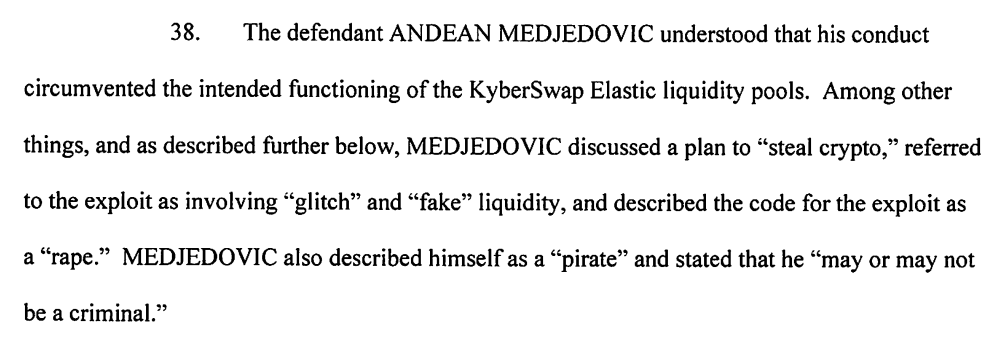
Yet another crypto fraudster is seeking a presidential pardon, though this one hasn’t even been convicted yet. Canadian Andean Medjedovic is wanted in the US, Canada, and the Netherlands for allegedly exploiting KyberSwap and Indexed Finance for a combined $65 million [I76], taunting the projects’ operators along the way. A February Foreign Agents Registration filing shows that lobbyists Jack Burkman and Jacob Wohl have been paid a $300,000 retainer to pursue a “presidential pardon to avert a miscarriage of justice”. The lobbyists argue that Medjedovic didn’t commit fraud or hacking, but rather “identified an ingenious way to operate within the boundaries set by KyberSwap Elastic and Indexed Finance’s own code.”1 This framing may prove problematic, however, given that Medjedovic himself discussed his plans to “steal crypto” in messages documented in his indictment.2
According to their disclosure, Burkman and Wohl have thus far made “preliminary introductions” with staff for Representatives Byron Donalds (R-FL) and Jason Smith (R-MO) — both prominent crypto industry advocates. Donalds serves on the House Financial Services Committee and its Digital Assets Subcommittee, while Smith chairs the House Ways and Means Committee.
The lobbyists’ names may sound familiar from their serial botched attempts to frame public figures for sexual assault, including Robert Mueller, Pete Buttigieg, Elizabeth Warren, Kamala Harris, and Anthony Fauci.
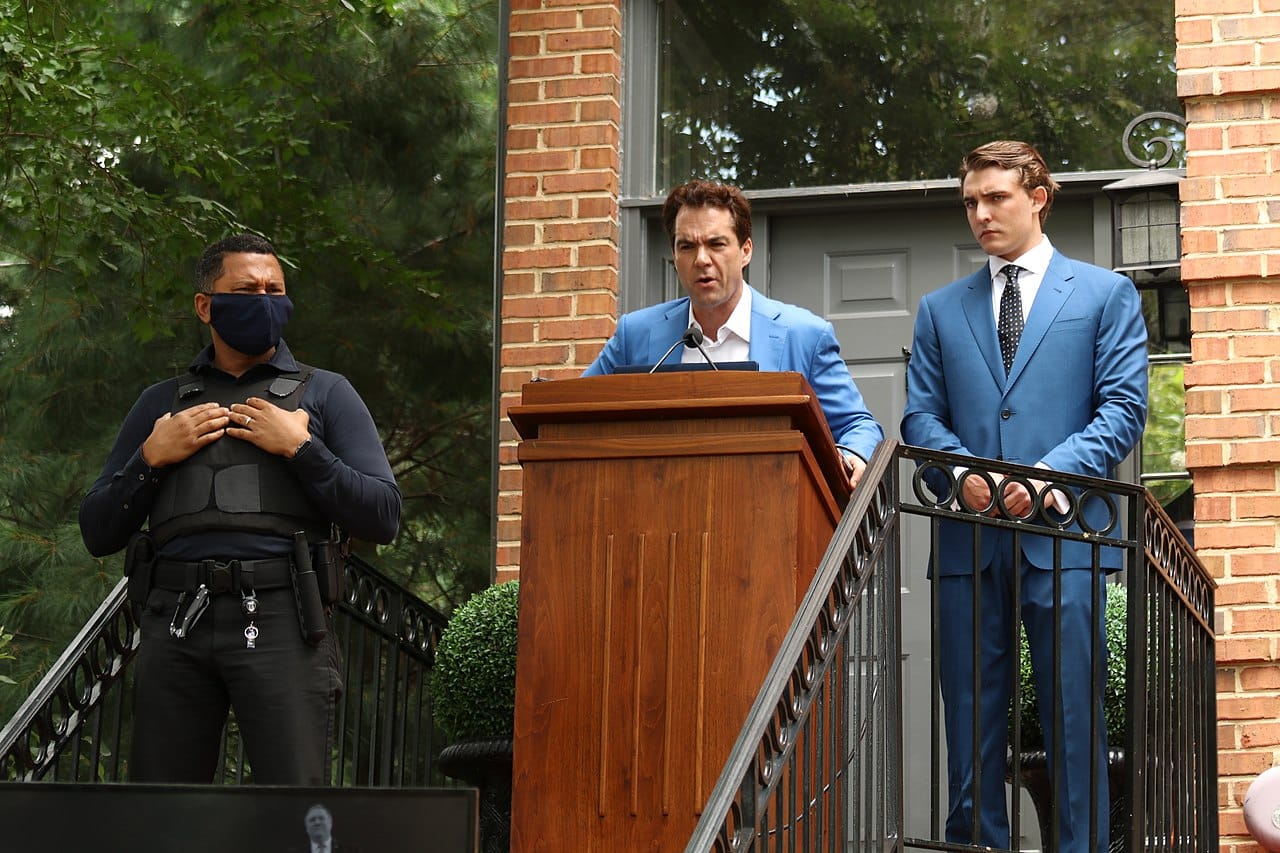
The duo also caught some charges of their own in 2025, when they pleaded guilty to felonies in Michigan for orchestrating a 2020 robocall voter suppression campaign targeting Black communities with false warnings that mail-in ballots would be used to pursue those with open warrants, collect on unpaid debts, or “track people for mandatory vaccines”. The FCC also slapped them with a record-breaking $5 million fine in connection to the calls. And Wohl is a questionable pick to make the argument that Medjedovic’s alleged exploits were actually legitimate financial activities, having himself been banned for life at age 20 by the National Futures Association and convicted of felony securities fraud.
Burkman’s small lobbying firm, JM Burkman & Associates, has operated for decades but has only taken on clients seeking presidential pardons under Trump’s presidencies. During his first term, they took on just two presidential pardon clients — one convicted of fraudulent aircraft part repairs, the other of running a Ponzi scheme. They earned $92,000 and $15,000 respectively for their services, and neither client received a pardon. But under Trump’s second term, their pardon business — which had gone dormant while Biden was in office — is booming. The Medjedovic retainer brought in $300,000. They earned $960,000 to lobby for a pardon for the operator of a $38 million nursing home tax fraud. And rapper Boosie Badazz, who pleaded guilty to being a felon in possession of a firearm after an arrest during a music video shoot, is paying them $600,000.4 Their success rates, however, have yet to catch up with their fees. When nursing home operator Joseph Schwartz eventually secured one of Trump’s many second-term pardons, it came only after he’d dismissed Burkman and Wohl and hired a different lobbyist.
Defi injuction
The District Court of the Northern District of Texas has dismissed a January 2025 lawsuit from Michael Lewellen, the developer of a cryptocurrency crowdfunding tool, who sought a preemptive declaration that his tool was legal and an injunction preventing charges of operating an unlicensed money transmission business. Lewellen stated in the lawsuit that he would not register as a money transmitter because “it will be impossible to comply with the reporting requirements that registration would demand” — namely, the requirements that money transmitting businesses verify and report the identities of their customers. The lawsuit, he says, was prompted by the several criminal cases from the Justice Department against non-custodial crypto privacy tools like Tornado Cash [Tornado] and Samourai Wallet [I96].5 (The Justice Department later decided not to pursue the charge of conspiracy to operate an unlicensed money transmitting business against Roman Storm, the developer of Tornado Cash, after Deputy Attorney General Todd Blanche issued an April 2025 memo instructing prosecutors not to pursue this charge in crypto cases [I81].) Lewellen’s complaint garnered support from eight crypto companies and industry advocacy groups, including Paradigm, Uniswap, the Solana Policy Institute, and the Blockchain Association, who filed a joint amicus brief. The brief alleged that “The Government’s aggressive prosecutions under § 1960 have sent shockwaves through the cryptocurrency industry” and “cast a cloud of uncertainty over cryptocurrency software developers, stifling development that is critical to the industry’s growth.”6
Nevertheless, the court granted the government’s motion to dismiss, finding that Lewellen failed to demonstrate he faces a substantial threat of prosecution. The court noted that money laundering was the core issue in the cases Lewellen cited as similar to his planned business, and pointed to the Blanche memo as further evidence that Lewellen is not in danger.7 Lewellen and his supporters have expressed disappointment with the decision. Peter Van Valkenburgh, executive director of the Coin Center cryptocurrency advocacy group, wrote: “DOJ memo is not binding law. It can be revised, revoked, or ignored. And it plainly has not provided meaningful protection to developers, given the outcomes in the Tornado Cash and Samourai Wallet cases.”8
In regulators
The SEC has dismissed with prejudice its enforcement action against Nader al-Naji, the founder of the defunct blockchain-based social network BitClout.9 The dismissal adds to a growing list of over a dozen crypto-related enforcement cases and investigations the SEC has dropped since Trump took office. The 2024 lawsuit had charged al-Naji with securities fraud, unregistered securities sales, and unjust enrichment, alleging he sold more than $250 million of his BTCLT token while lying to investors about the supposedly decentralized nature of the project [I63]. According to the SEC, al-Naji then used some of the proceeds for personal expenses, including renting a Beverly Hills mansion, paying his personal credit card bills, and making cash gifts of at least $2.9 million to family.10 Shortly after Trump took office, in February 2025, the Justice Department dismissed a criminal wire fraud case against al-Naji.11
Not everyone at the SEC has welcomed the apparent directive to abandon crypto enforcement. Margaret Ryan, the SEC’s Enforcement Division Director, has resigned after only six months in the position. Reuters has reported that two sources familiar with the matter said that “Ryan wanted to be more aggressive in pursuing charges for fraud and other misconduct including in cases that touched the president’s circle, faced resistance from SEC chair Paul Atkins and other top Republican political appointees.” Among the cases Ryan reportedly balked at dropping were those against Justin Sun [I102] and Elon Musk, both Trump megadonors. (While Sun is not a US citizen and cannot make direct campaign contributions, he has contributed to Trump through the Trump family’s cryptocurrency ventures.)12
In Congress
Clarity Act
After Coinbase scuttled a planned Senate Banking markup hearing on draft language for the Clarity Act crypto market structure bill in January [I99], the crypto lobby, the banking lobby, and members of Congress have been battling over various components of the wide-ranging bill. The push to advance the controversial legislation has grown increasingly desperate as circumstances mount against it: midterm campaigns are well underway, and Trump’s Iran war is siphoning attention away from other issues in front of Congress.
Draft amendments prohibiting stablecoin rewards — a provision pushed heavily by the banking lobby, which views such rewards as competitive threats to traditional bank deposit products [I99] — were among Coinbase’s primary objections in January. But some members of Congress now appear willing to proceed without the exchange’s blessing, a risky gambit considering Coinbase has effectively become a shadow legislature, drafting bills and holding veto power over proposed crypto regulation. In doing so, Congresspeople are also breaking from Trump, who posted on his social media platform that banks were “undermin[ing] our powerful Crypto Agenda” with their opposition to stablecoin rewards [I102].
It seems that Coinbase is still unwilling to budge on the stablecoin rewards issue,13 which is perhaps unsurprising given the exchange’s lucrative partnership with Circle, the issuer of USDC. But this intransigence is frustrating some others in the industry, who increasingly view Coinbase’s stance as putting the entire legislative effort at risk. “6 weeks later, Coinbase [is] still holding the whole industry hostage,” wrote Arca executive Jeff Dorman on Twitter. “I’m all for doing what is right for your shareholders, but this is becoming incredibly short-sighted as the whole industry is going to suffer far more than any gains COIN gets out of killing this bill.”14 Delphi Digital co-founder Tommy Shaughnessy echoed his concern, arguing that Coinbase should accept a compromise now rather than risk losing the bill entirely. “We need a bill/clarity before democrats take back the house. Once Crypto/stablecoins 10x we can revisit this down the road”.15
With Congress in recess until mid-April and other controversial portions of the bill still unresolved, the window for passage is rapidly closing. As Galaxy Digital Research Director Alex Thorn observed, “If Clarity doesn’t pass committee by end of April, odds of passage in 2026 become extremely low”.16 Senator Bernie Moreno (R-OH) holds a similar opinion: “If we don’t get the Clarity Act passed by May, digital asset legislation will not pass for the foreseeable future.”17
Cynthia Lummis (R-WY) says she’s confident that the bill will be done by then,18 but Congress has used up their boy-who-cried-wolf quota on timeline predictions for this bill. Senators have predicted it would pass by the end of September 2025 [I91], then by the end of last year [I97], and here we are.
In the White House
PCAST
While it might seem like good news that “AI & Crypto Czar” David Sacks has exited the role, it appears to be a reshuffling in name only to dodge the 130-day limit on the terms of special government employees that Congresspeople pointed out months ago he was already exceeding [I93]. Sacks is now stripped of that title, and is left only as the co-chair of the President’s Council of Advisors on Science and Technology, which judging by its makeup is now the council of billionaire tech executives on AI (with a little crypto and nuclear energy sprinkled in). Sacks was named co-chair in a January 2025 executive order re-establishing the council, along with fellow co-chair Michael Kratsios, who worked for Peter Thiel and Thiel’s portfolio company Scale AI, and was a technology adviser during Trump’s first term. Though the two have held their co-chair positions for over a year now, the council was otherwise empty. Now that Sacks is out of his separate advisory role, Trump seems to have remembered the council exists, and has just announced a list of members:19
- Marc Andreessen (co-founder and general partner at Andreessen Horowitz)
- Sergey Brin (co-founder, former president, and AI researcher at Google)
- Safra Catz (executive vice chair of Oracle)
- Michael Dell (founder, CEO, and chairman of Dell)
- Jacob DeWitte (founder of nuclear reactor technology company Oklo)
- Fred Ehrsam (co-founder of Coinbase, co-founder and general partner of crypto VC firm Paradigm)
- Larry Ellison (co-founder, executive chairman, and CTO of Oracle)
- David Friedberg (angel investor and co-host — alongside Sacks — of the All-In podcast)
- Jensen Huang (founder, president, and CEO of Nvidia)
- John Martinis (quantum physicist and professor at UC Santa Barbara)
- Bob Mumgaard (co-founder and CEO of fusion technology company Commonwealth Fusion Systems)
- Lisa Su (president and CEO of AMD)
- Mark Zuckerberg (cofounder, CEO, and chairman of Facebook and Meta)
Under previous administrations, including in Trump’s first term, the science advisory council was typically a mix of professors, scientists, doctors, and executives. Now, it has more All-In podcast hosts than it does professors.
Howard Lutnick
According to Bloomberg, Howard Lutnick’s October 2025 sale of Cantor Fitzgerald to his children — ostensibly to eliminate conflicts of interest — may have been financed in part by controversial stablecoin giant Tether, which maintains other business relationships with Cantor. Law professor and former D.C. ethics counsel Kathleen Clark observed that “this transaction is in theory supposed to eliminate a conflict of interest, but in reality it creates a new one.” Lutnick secured a waiver to participate in cryptocurrency policy conversations before completing the sale, and now that he is technically fully divested, his family continues to profit from crypto and other deals.20
In elections and political influence
Super PACs
The Fairshake crypto super PAC network was dealt a harsh rebuke in Illinois, despite pouring $14.2 million into the Senate race and eight House districts. True to form, the PACs backed likely winners in most races to produce an impressive scorecard. But their real money went into two high-stakes Democratic primaries: the Senate and House District 7.
Despite $10.3 million spent opposing Democratic Senate candidate Juliana Stratton and $2.5 million against Democratic House candidate La Shawn Ford, both candidates won their races. That $12.8 million — 90% of the PAC network’s spending in the state — was squandered.
Whether these losses stemmed solely from Stratton and Ford’s own strengths, or if we’re also beginning to see voter backlash against heavy spending from corporations and other outside interests, remains unclear with so few states having held their primaries. But both candidates had directly called out the crypto industry’s spending in their races. Ford went further, sending Fairshake a cease-and-desist over an ad he alleged falsely portrayed him as corrupt, a convicted felon for bank fraud, and someone who had abused his power in the Illinois state legislature. Ford has pledged to continue fighting false political ads beyond the primary, though Fairshake will likely abandon both his race and Stratton’s, which are heavily favored to go Democratic in the general election.21
We’re in a bit of a quiet spell now, with the next state primaries over a month away. However, with nearly a dozen states scheduled to hold their primary elections in May — some of which are predicted to be highly competitive — spending targeting those voters is likely to ramp up very soon.
Stand With Crypto
The Coinbase-backed political advocacy group Stand With Crypto announced its first slate of House candidate endorsements, targeting battleground races where they say candidates have “demonstrated clear support for crypto innovation and policy.”22 The six endorsed candidates are equally split across parties, and all are incumbents:

They’re also planning to target two sitting members of Congress they view as hostile to crypto interests. The group warns it will “prioritize races in Ohio’s Ninth Congressional District and Pennsylvania’s 10th Congressional District, where incumbents — both Democrat and Republican — have concerning records on crypto policy.”
The Ohio target is Democratic Representative Marcy Kaptur, who faces a challenging reelection bid after redistricting. All three frontrunners in the Republican primary race have “A” ratings on Stand With Crypto, so the lack of endorsement now suggests they’re likely to just back whoever wins the primary.
In Pennsylvania, they’re taking aim at Republican Scott Perry, whose case illustrates the arbitrary nature of Stand With Crypto’s rating system. Despite Perry’s profile showing one “very pro-crypto” statement and five pro-crypto votes or bill sponsorships, a single vote against the Genius Act earned him a “strongly against crypto” F rating.23 The industry may be ready to back his Democratic challenger, former news anchor Janelle Stelson, who lost to Perry in 2024. She has never held office and so has no voting record, but has filled out the Stand With Crypto questionnaire with supportive answers — a strong signal she’s open to industry super PAC support.24
As in 2024, the crypto industry is deploying a two-pronged strategy: offering support to candidates willing to embrace the crypto agenda while threatening opponents with both heavy spending and the specter of a mobilized “crypto voter” bloc.
 Molly White
Stand With Crypto’s new poll results, released alongside the endorsements, purport to demonstrate that mobilized voter bloc. Crypto voters, they claim in one takeaway, “are a potential major swing voting bloc in the upcoming midterm elections”.25 But the survey exemplifies the rigor typical of crypto industry polling. Their sample is evenly split between 500 cryptocurrency owners and 500 “Stand With Crypto advocates”, over-representing the most politically engaged crypto enthusiasts with no indication that the results are weighted to account for this bias. The survey selectively breaks out Stand With Crypto advocates when reporting particularly favorable numbers, but never identifies results for non-advocate crypto owners alone — meaning most topline figures blend casual crypto owners with those who care so much about the subject to sign up as advocates.
Even with this sample tilted heavily toward their activist base, only 64% expressed enthusiasm about voting for pro-crypto candidates. If they can’t even get two-thirds enthusiasm from their most engaged supporters, what does that actually say about crypto’s power as a swing voting issue?
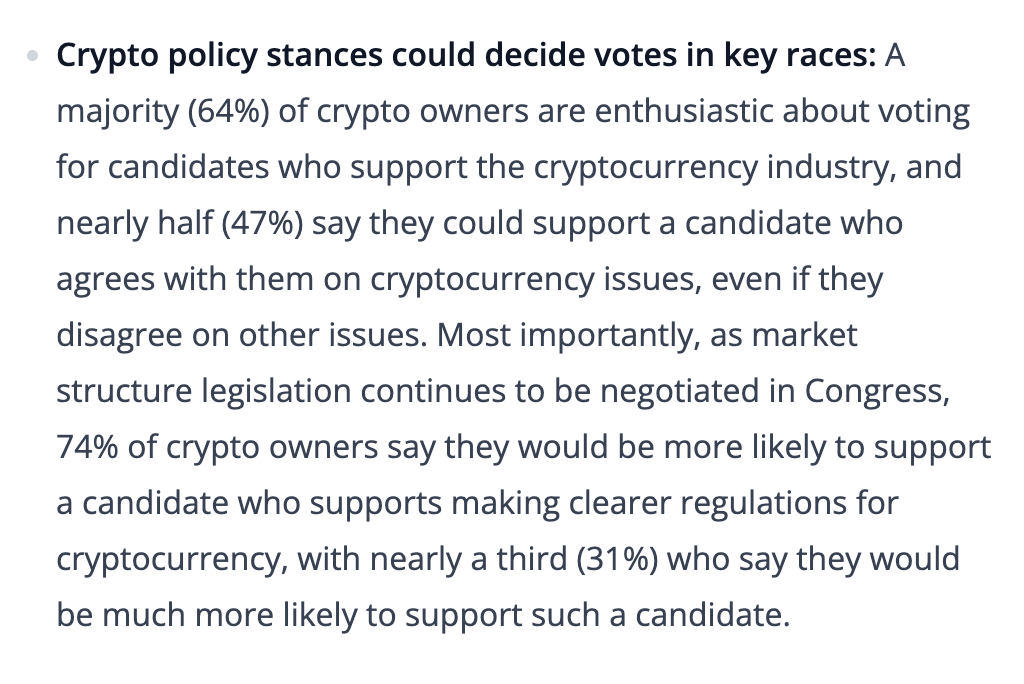
It’s also remarkable that only 74% of their respondents say they would be more likely to support a candidate “who supports making clearer regulations for cryptocurrency”, which is an anodyne, almost universally popular framing. Who doesn’t want clear regulations? Presenting the crypto industry’s preferred deregulatory changes as “clarity” in crypto regulation has been such a popular tactic that it even produced the name of the current market structure bill, the Clarity Act. And asking poll respondents vague and uncontroversial questions, then spinning their answers as support for specific industry goals, has been a common tactic in industry-funded polls.
I requested more information about the poll from both Stand With Crypto and Impact Research, the pollster who they hired for the survey. Neither responded to my inquiry.
In prediction markets
Even as the CFTC has decided its new mandate is prediction markets protector rather than markets regulator [I101], states and Native American tribes are continuing to take the platforms to court. A Nevada state judge has granted a temporary restraining order that bans Kalshi from the state, finding that the state is “reasonably likely to prevail on the merits”.26 This will last until an April hearing over whether to impose an injunction, which would extend the ban as the case continues.
Washington state, whose unusually strict gambling laws ban online gambling entirely, is among the latest to say Kalshi is violating those laws. They further allege that Kalshi is explicitly targeting young adults, and particularly young adult men, with its marketing and that “Kalshi is now fueling a public health crisis in Washington by promoting and providing illegal online betting in the state under the guise of ‘events trading’ in a financial ‘prediction market.’” They point to Kalshi’s own advertising about how it “cracked the code on legal betting in all 50 states”, likely to preempt Kalshi’s usual excuse that they’re offering trades, not bets.27
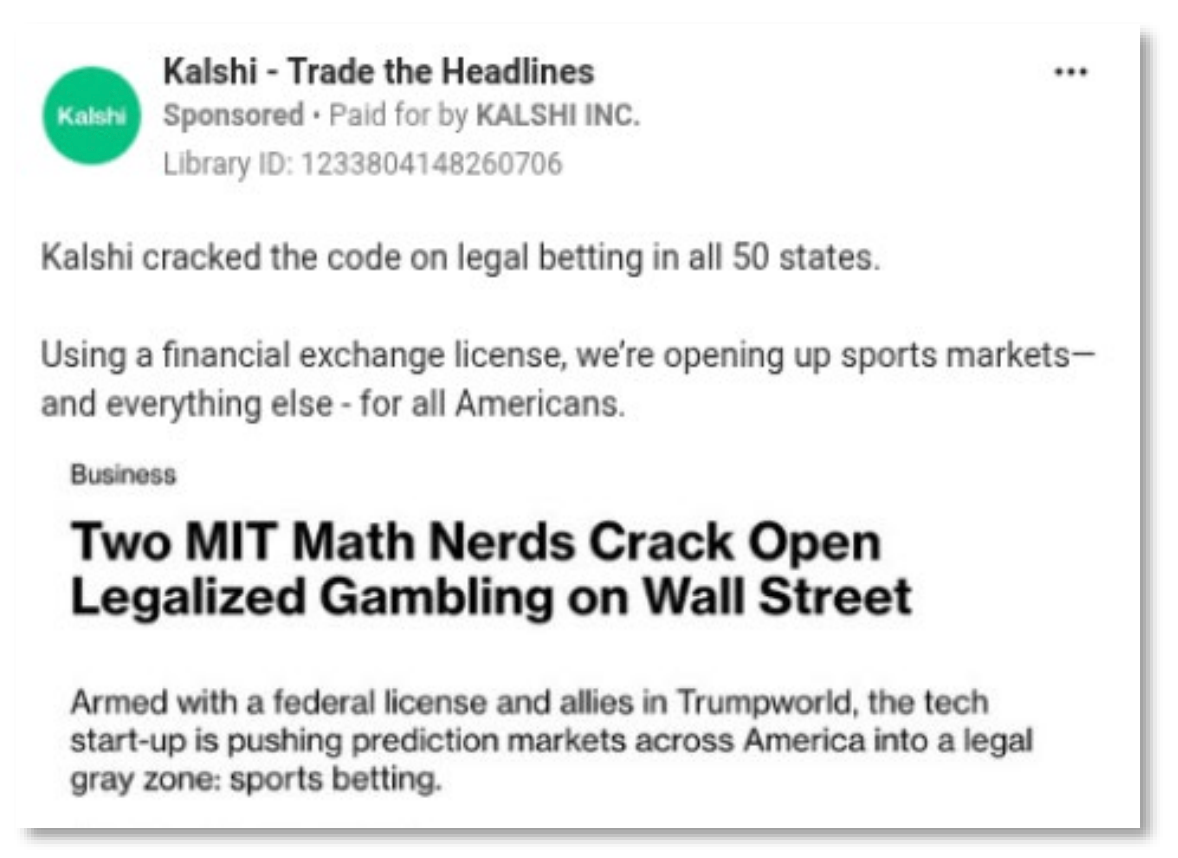
And as the civil lawsuits pile up — at least 20 of them against Kalshi so far28 — Arizona has taken things even a step further by filing criminal charges against the company for violations of state gambling and election gambling laws.29 Kalshi attempted to shut it down by running to federal court for an injunction before the case was even filed, but District Judge Michael Liburdi has denied their request for a temporary restraining order. It remains to be seen whether he will grant some form of injunction, but he didn’t sound all that tempted when he ordered that “Plaintiff must show cause, no later than March 20, 2026, why this Court should not abstain from this case in light of the criminal proceedings brought by the State of Arizona against Plaintiff in state court”.30
Kalshi isn’t giving up without a fight, though. They’ve sued numerous states that have already brought enforcement actions against them, or that they expect will. They’re appealing several actions from state courts, and they’re aggressively seeking to remove state cases to federal court, where they apparently believe they’ll stand a better chance — and where the CFTC might more easily intervene [I101].
Congress is also considering stepping in, with Senators Adam Schiff (D-CA) and John Curtis (R-UT) proposing a “Prediction Markets Are Gambling Act” to prohibit CFTC-regulated prediction markets like Kalshi from offering bets on sporting events or “casino-style games” like poker. Beyond their complaints about the prediction market firms, their press release criticizes the regulator as well: “For fifteen years, the CFTC has enforced its authority to prohibit the listing of a contract that involves, relates to, or references, ‘gaming.’ However, the CFTC and its Chair have abruptly reversed course—intervening in ongoing litigation and proceeding with rulemaking to significantly relax the CFTC’s enforcement of this clause. Now, the CFTC is entering into partnerships with entities like Major League Baseball to further facilitate these markets’ growth.”31 This legislation adds to a growing pile of proposed bills to restrict prediction markets, though it’s perhaps the broadest so far. Other proposals, like Schiff’s bicameral “Death Bets Act” would seek to unequivocally prohibit contracts related to terrorism, assassination, or war [I102]; and bills like Ritchie Torres’ Public Integrity in Financial Prediction Markets Act would restrict participation on political events contracts by elected officials, appointees, and staff [I99].
Some new research is suggesting that prediction markets are actually worse than gambling, at least in terms of the outcomes for bettors. Citizens JMP has found that retail customers had a median return of -8% on prediction markets, versus -5% on sportsbooks. This is at least in part because, unlike regulated sportsbooks, prediction markets don’t limit or prohibit profitable bettors. Whereas sportsbook bettors primarily bet against the house, prediction market customers trade against other users — and these users often include sophisticated professional bettors and market makers (not to mention those with inside information, as I’ve covered in other recent issues [I99, 101, 102]).32
After Coinbase rolled out notifications inviting their customers to participate in their new prediction markets on March Madness basketball games, some of their customers were shocked, shocked, to find that gambling is going on in there.

Outside the US
The United Kingdom has decided to ban cryptocurrency donations to political parties, at least until they can implement a system to properly monitor them. They have also said they will limit political contributions from British citizens living outside of the country to £100,000 (~$134,000) per year.33 This all comes after Christopher Harborne, a Thailand-based British–Thai citizen, contributed £12 million ($15.9 million) to Reform UK last year [I98, 102]. It also follows reporting that Reform UK had not shared any of its wallet addresses with the UK’s election watchdog, preventing them from scrutinizing contributions.34 The UK Government has presented the limits as “changes to protect UK democracy from [the] scourge of foreign actors and financial influence”.
Canada is now also considering legislation that would prohibit crypto donations and other “anonymous/hard to trace contributions” like money orders and prepaid cards. It’s part of a sweeping bill that would also ban most election-related deepfakes and further limit foreign political spending.35
Binance has been fined AUD$10 million (US$6.9 million) in Australia for misclassifying retail traders as institutional investors and allowing them to trade high-risk crypto derivatives without the usual protections. The 524 misclassified clients — who made up more than 85% of its local customers — lost AUD$8.66 million (US$5.9 million) on their trades and paid AUD$3.9 million (US$2.7 million) in fees. The issue stemmed from an investor sophistication onboarding quiz that customers could retake until they passed, and other issues pertaining to individual wealth tests and compliance staff failures.36
The Web3 is Going Just Great recap
There were five entries between March 14 and 30. $26.15 million was added to the grift counter.
- Moonwell faces $1 million governance attack [link]
- Balancer Labs shuts down after $110 million hack [link]
- USR stablecoin depegs in $24 million exploit [link]
- Venus Protocol accumulates $2.15 million in bad debt after exploit [link]
- BlockFills goes bankrupt [link]
In the news
HuffPost, CoinDesk, City & State NY, and DL News (1, 2, 3) cited my data analysis and reporting on the crypto lobby and its election spending.
That's all for now, folks. Until next time,
– Molly White
Have information? Send tips (no PR) to molly0xfff.07 on Signal or molly@mollywhite.net (PGP).
I have disclosures for my work and writing pertaining to cryptocurrencies.
References
FARA filing by JM Burkman & Associates LLC on February 20, 2026. ↩
Indictment filed on December 30, 2024. Document #1 in US v. Medjedovic. ↩
“Political fraudster Jacob Wohl denies “kidnapping” former White House staffer Merritt Corrigan”, News2Share. ↩
Registrations and quarterly activity for pardon issues by JM Burkman & Associates. ↩
Complaint filed on January 16, 2025. Document #1 in Lewellen v. Bondi. ↩
Amicus brief in support filed on July 28, 2025. Document #34 in Lewellen v. Bondi. ↩
Memorandum and order filed on March 25, 2026. Document #41 in Lewllen v. Bondi. ↩
Stipulation of voluntary dismissal filed on March 12, 2026. Document #60 in SEC v. Al-Naji. ↩
Complaint filed on July 30, 2024. Document #1 in SEC v. Al-Naji. ↩
Dismissal of complaint filed on February 28, 2025. Document #3 in US v. Al-Naji. ↩
“Exclusive: US SEC's ex-enforcement chief clashed with bosses over Trump cases before leaving, sources say”, Reuters. ↩
“Vault: Coinbase not sold on stablecoin compromise”, Punchbowl News. ↩
“Trump regulators forge ahead with crypto rules amid Senate holdups”, The Hill. ↩
“Key U.S. senator on crypto market structure bill negotiation: ‘We think we've got it’”, CoinDesk. ↩
“President Trump Announces Appointments to President’s Council of Advisors on Science and Technology”, The White House. ↩
“As Lutnick Sold Cantor to His Children, Tether Gave Them a Loan”, Bloomberg. ↩
“Ford campaign warns crypto funded PAC to cease and desist ‘defamatory’ ads”, The Wednesday Journal. ↩
“Stand With Crypto Launches Midterms Election Program: Unveiling New Online Voter Hub, Spotlighting Initial Slate of Endorsements, Previewing 2026 Battleground Strategy to Mobilize Voters in Support of Pro-Crypto Candidates”, Stand With Crypto. ↩
Scott Perry on Stand With Crypto. ↩
Janelle Stelson on Stand With Crypto. ↩
“Crypto Owners are a Key Swing Voting Bloc in 2026 Battlegrounds”, Stand With Crypto and Impact Research. ↩
Order granting plaintiff’s application for ex parte temporary restraining order filed on March 20, 2026. State of Nevada v. KalshiEx. ↩
Complaint filed on March 27, 2026. State of Washington v. KalshiEx. ↩
“Arizona AG files criminal charges against Kalshi over ‘illegal gambling’”, NPR. ↩
Order filed on March 17, 2026. Document #15 in KalshiEx v. Johnson. ↩
Information filed on March 17, 2026. State of Arizona v. KalshiEx. ↩
“NEWS: Sens. Schiff, Curtis Introduce Bipartisan Legislation to Ban Sports Prediction Market Contracts”, Senator Adam Schiff. ↩
“Retail traders fare worse on prediction markets than sportsbooks”, CoinDesk. ↩
“Cap on donations from overseas electors and ban on crypto donations to protect democracy”, United Kingdom Government. ↩
“The Elections Watchdog Doesn’t Know Where Reform UK’s Crypto Donations Are Coming From”, Byline Times. ↩
Strong and Free Elections Act - Amendments to the Canada Elections Act, Canada Government. ↩
“Binance Australia Derivatives fined $6.9 million over compliance and onboarding failures”, The Block. ↩


